AI for Business

Explore the best AI for Business — independent reviews, comparisons, pricing and step-by-step how-to guides, curated by Aizhi.

  • Arabic Ontology

    Arabic Ontology

    Arabic Ontology is a website offering linguistic ontology services for the Arabic language which can be used like the online site WordNet. Users can use Arabic Ontology to classify or clarify the concepts and meanings of Arabic terms. == Ontology Structure == The ontology structure (i.e., data model) is similar to WordNet's structure. Each concept in the database is given a unique concept identifier (URI), informally described by a gloss, and lexicalized by one or more synonymous lemma terms. Each term-concept pair is called a sense, and is given a SenseID. A set of senses is called synset. Concepts and senses are described by further attributes such as era and area — to specify example usage and ontological analysis. Semantic relations are defined between concepts. Some important entities are included in the ontology, such as individual countries and bodies of water. These individuals are given separate IndividualIDs and linked with their concepts through the InstanceOf relation. == Mappings to other resources == Concepts in the Arabic Ontology are mapped to synsets in WordNet, as well as to BFO and DOLCE. Terms used in the Arabic Ontology are mapped to lemmas in the LDC's SAMA database. == Applications == Arabic Ontology can be used in many application domains, such as: Information retrieval, to enrich queries (e.g., in search engines) and improve the quality of the results, i.e. meaningful search rather than string-matching search; Machine translation and word-sense disambiguation, by finding the exact mapping of concepts across languages, especially that the Arabic ontology is also mapped to the WordNet; Data Integration and interoperability in which the Arabic ontology can be used as a semantic reference to link databases and information systems; Semantic Web and Web 3.0, by using the Arabic ontology as a semantic reference to disambiguate the meanings used in websites; among many other applications. == URLs Design == The URLs in the Arabic Ontology are designed according to the W3C's Best Practices for Publishing Linked Data, as described in the following URL schemes. This allows one to also explore the whole database like exploring a graph: Ontology Concept: Each concept in the Arabic Ontology has a ConceptID and can be accessed using: https://{domain}/concept/{ConceptID | Term}. In case of a term, the set of concepts that this term lexicalizes are all retrieved. In case of a ConceptID, the concept and its direct subtypes are retrieved, e.g. https://ontology.birzeit.edu/concept/293198 Semantic relations: Relationships between concepts can be accessed using these schemes: (i) the URL: https:// {domain}/concept/{RelationName}/{ConceptID} allows retrieval of relationships among ontology concepts. (ii) the URL: https://{domain}/lexicalconcept/{RelationName}/{lexicalConceptID} allows retrieval of relations between lexical concepts. For example, https://ontology.birzeit.edu/concept/instances/293121 retrieves the instances of the concept 293121. The relations that are currently used in our database are: {subtypes, type, instances, parts, related, similar, equivalent}.

    Read more →
  • Yasuo Matsuyama

    Yasuo Matsuyama

    Yasuo Matsuyama (born March 23, 1947) is a Japanese researcher in machine learning and human-aware information processing. Matsuyama is a Professor Emeritus and an Honorary Researcher of the Research Institute of Science and Engineering of Waseda University. == Early life and education == Matsuyama received his bachelor’s, master’s and doctoral degrees in electrical engineering from Waseda University in 1969, 1971, and 1974 respectively. The dissertation title for the Doctor of Engineering is Studies on Stochastic Modeling of Neurons. There, he contributed to the spiking neurons with stochastic pulse-frequency modulation. Advisors were Jun’ichi Takagi, Kageo, Akizuki, and Katsuhiko Shirai. Upon the completion of the doctoral work at Waseda University, he was dispatched to the United States as a Japan-U.S. exchange fellow by the joint program of the Japan Society for the Promotion of Science, Fulbright Program, and the Institute of International Education. Through this exchange program, he completed his Ph.D. program at Stanford University in 1978. The dissertation title is Process Distortion Measures and Signal Processing. There, he contributed to the theory of probabilistic distortion measures and its applications to speech encoding with spectral clustering or vector quantization. His advisor was Robert. M. Gray. == Career == From 1977 to 1078, Matsuyama was a research assistant at the Information Systems Laboratory of Stanford University Archived 2018-03-16 at the Wayback Machine. From 1979 to 1996, he was a faculty of Ibaraki University, Japan (the final position was a professor and chairperson of the Information and System Sciences Major). Since 1996, he was a Professor of Waseda University, Department of Computer Science and Engineering. From 2011 to 2013, he was the director of the Media Network Center of Waseda University. At the 2011 Tōhoku earthquake and tsunami of March 11, 2011, he was in charge of the safety inquiry of 65,000 students, staffs and faculties. Since 2017, Matsuyama is a Professor Emeritus and an Honorary Researcher of the Research Institute of Science and Engineering of Waseda University. Since 2018, he serves as an acting president of the Waseda Electrical Engineering Society. == Work == Matsuyama’s works on machine learning and human-aware information processing have dual foundations. Studies on the competitive learning (vector quantization) for his Ph.D. at Stanford University brought about his succeeding works on machine learning contributions. Studies on stochastic spiking neurons for his Dr. Engineering at Waseda University set off applications of biological signals to the machine learning. Thus, his works can be grouped reflecting these dual foundations. Statistical machine learning algorithms: The use of the alpha-logarithmic likelihood ratio in learning cycles generated the alpha-EM algorithm (alpha-Expectation maximization algorithm). Because the alpha-logarithm includes the usual logarithm, the alpha-EM algorithm contains the EM-algorithm (more precisely, the log-EM algorithm). The merit of the speedup by the alpha-EM over the log-EM is due to the ability to utilize the past information. Such a usage of the messages from the past brought about the alpha-HMM estimation algorithm (alpha-hidden Markov model estimation algorithm) that is a generalized and faster version of the hidden Markov model estimation algorithm (HMM estimation algorithm). Competitive learning on empirical data: Starting from the speech compression studies at Stanford, Matsuyama developed generalized competitive learning algorithms; the harmonic competition and the multiple descent cost competition. The former realizes the multiple-object optimization. The latter admits deformable centroids. Both algorithms generalize the batch-mode vector quantization (simply called, vector quantization) and the successive-mode vector quantization (or, called learning vector quantization). A hierarchy from the alpha-EM to the vector quantization: Matsuyama contributed to generate and identify the hierarchy of the above algorithms. Alpha-EM ⊃ log-EM ⊃ basic competitive learning (vector quantization, VQ; or clustering). On the class of the vector quantization and competitive learning, he contributed to generate and identify the hierarchy of VQs. VQ ⇔ {batch mode VQ, and learning VQ} ⊂ {harmonic competition} ⊂ {multiple descent cost competition}. Applications to Human-aware information processing: The dual foundations of his led to the applications to huma-aware information processing. Retrieval systems for similar images and videos. Bipedal humanoid operations via invasive and noninvasive brain signals as well as gestures. Continuous authentication of uses by brain signals. Self-organization and emotional feature injection based on the competitive learning. Decomposition of DNA sequences by the independent component analysis (US Patent: US 8,244,474 B2). Data compression of speech signals by the competitive learning. The above theories and applications work as contributions to IoCT (Internet of Collaborative Things) and IoXT (http://www.asc-events.org/ASC17/Workshop.php Archived 2018-02-06 at the Wayback Machine). == Awards and honors == 2016: e-Teaching Award of Waseda University 2015: Best Textbook Award by the Japanese Society of Information Processing 2014: Fellow of the Japanese Society of Information Processing 2013: IEEE Life Fellow 2008: Y. Dote Memorial Best Paper Award of CSTST 2008 from ACM and IEEE 2006: LSI Intellectual Property Design Award from the LSI IP Committee 2004: Best Paper Award for Application Oriented Research from Asia Pacific Neural Network Assembly 2002: Fellow Award from the Institute of Electronics, Information and Communication Engineers. 2001: Telecommunication System Major Award of the Telecommunications Advancement Foundation 2001: Outstanding Paper Award of IEEE Transactions on Neural Networks Archived 2013-01-17 at the Wayback Machine 1998: Fellow Award from IEEE for contributions to learning algorithms with competition. 1992: Best Paper Award from the Institute of Electronics, Information and Communication Engineers 1989: Telecommunication System Promotion Award of the Telecommunications Advancement Foundation

    Read more →
  • Eric Xing

    Eric Xing

    Eric Poe Xing (Chinese: 邢波) is an American computer scientist who has been serving as president of Mohamed bin Zayed University of Artificial Intelligence (MBZUAI) since January 2021. He is also a professor in the Carnegie Mellon University School of Computer Science where he founded the SAILING Lab in 2004, and is the co-founder of the AI companies Petuum and GenBio AI. Xing's research focuses on statistical machine learning, probabilistic graphical models, and systems for distributed machine learning. He was elected a Fellow of the Institute of Electrical and Electronics Engineers in 2019 for "contributions to machine learning algorithms and systems" and a Fellow of the Association for Computing Machinery in 2022 for "contributions to algorithms, architectures, and applications in machine learning." == Education == Xing earned a B.Sc. in physics from Tsinghua University in 1993, and an M.Sc. in computer science from Rutgers University in 1998. He earned a Ph.D. in molecular biology and biochemistry from Rutgers in 1999, supervised by molecular cancer researcher Chung S. Yang. His dissertation examined the inactivation of the Rb and p53 pathways in human esophageal squamous cell carcinoma. He earned a second Ph.D. in computer science from the University of California, Berkeley in 2004, supervised by Richard Karp, Michael I. Jordan, and Stuart J. Russell. His thesis applied probabilistic graphical models to motif identification and haplotype inference in genomic data. == Career == Xing joined Carnegie Mellon University (CMU) as a faculty member in 2004, where he created the Statistical Artificial Intelligence and Integrative Genomics (SAILING) Lab. He held visiting appointments from 2010 to 2011, serving as a visiting research professor at Facebook Inc. and as a visiting associate professor in the Department of Statistics at Stanford University. He served as co-Program Chair of the International Conference on Machine Learning (ICML) in 2014 and General Chair in 2019. Xing served as the founding director of CMU’s Center for Machine Learning and Health, established in 2015 as part of the Pittsburgh Health Data Alliance, a collaboration between CMU, the University of Pittsburgh, and the University of Pittsburgh Medical Center. In 2016, Xing co-founded Petuum Inc., a US-based startup. In 2017, Petuum raised $93 million in a round of venture funding from SoftBank. In 2018 Petuum was named a World Economic Forum Technology Pioneer. In 2019, Xing received the Carnegie Science Award for Startup Entrepreneurs in recognition of his leadership of Petuum. On 29 November 2020, Xing was appointed president of the Mohamed bin Zayed University of Artificial Intelligence (MBZUAI), with the appointment taking effect in January 2021. In 2024, Xing co-founded GenBio AI where he is chief scientist. The US-based startup, which he co-founded with David Baker, Ziv Bar-Joseph, Emma Lundberg, Le Song and Fred Hu, aims to create AI-driven digital organisms (AIDO) for the purposes of modeling medical treatments. Xing has overseen the launch of the MBZUAI Institute of Foundation Models (IFM), which focuses on research and development of large-scale foundation models. In 2025–2026, IFM released the open-source reasoning model K2 Think, which was covered internationally as part of the UAE’s push to develop domestically controlled (“sovereign”) AI capabilities. IFM presented PAN as a “world model” research project and demonstrated related systems publicly. MBZUAI also collaborated with G42 and Cerebras Systems on the Jais language model, an open-source Arabic–English large language model released in 2023, according to Reuters. == Awards and honors == Xing is a recipient of the National Science Foundation (NSF) Career Award and the Alfred P. Sloan Research Fellowship. Xing is an elected Fellow of the following institutes and associations: Association for the Advancement of Artificial Intelligence (AAAI) 2016 Institute of Electrical and Electronics Engineers (IEEE) 2019 for "contributions to machine learning algorithms and systems" American Statistical Association (ASA) 2022 Association for Computing Machinery (ACM) 2022 for "contributions to algorithms, architectures, and applications in machine learning" Institute of Mathematical Statistics (IMS) 2023 International Society for Computational Biology (ISCB) 2026 == Selected publications == Eric P. Xing; Michael I. Jordan; Stuart J. Russell; Andrew Y. Ng (2003). "Distance Metric Learning with Application to Clustering with Side-Information" (PDF). Advances in Neural Information Processing Systems 15. Advances in Neural Information Processing Systems. Wikidata Q77691192. Edoardo M. Airoldi; David M. Blei; Stephen E Fienberg; Eric P Xing (1 September 2008). "Mixed Membership Stochastic Blockmodels". Journal of Machine Learning Research. 9: 1981–2014. ISSN 1533-7928. PMC 3119541. PMID 21701698. Wikidata Q35058357. Eric P. Xing; Michael I. Jordan; Richard M. Karp (28 June 2001), Feature selection for high-dimensional genomic microarray data, vol. 18, pp. 601–608, Wikidata Q138678867 Xing EP; Karp RM (1 January 2001). "CLIFF: clustering of high-dimensional microarray data via iterative feature filtering using normalized cuts". Bioinformatics. 17 Suppl 1: S306-15. doi:10.1093/BIOINFORMATICS/17.SUPPL_1.S306. ISSN 1367-4803. PMID 11473022. Wikidata Q30657299.

    Read more →
  • Optical braille recognition

    Optical braille recognition

    Optical braille recognition is technology to capture and process images of braille characters into natural language characters. It is used to convert braille documents for people who cannot read them into text, and for preservation and reproduction of the documents. == History == In 1984, a group of researchers at the Delft University of Technology designed a braille reading tablet, in which a reading head with photosensitive cells was moved along set of rulers to capture braille text line-by-line. In 1988, a group of French researchers at the Lille University of Science and Technology developed an algorithm, called Lectobraille, which converted braille documents into plain text. The system photographed the braille text with a low-resolution CCD camera, and used spatial filtering techniques, median filtering, erosion, and dilation to extract the braille. The braille characters were then converted to natural language using adaptive recognition. The Lectobraille technique had an error rate of 1%, and took an average processing time of seven seconds per line. In 1993, a group of researchers from the Katholieke Universiteit Leuven developed a system to recognize braille that had been scanned with a commercially available scanner. The system, however, was unable to handle deformities in the braille grid, so well-formed braille documents were required. In 1999, a group at the Hong Kong Polytechnic University implemented an optical braille recognition technique using edge detection to translate braille into English or Chinese text. In 2001, Murray and Dais created a handheld recognition system, that scanned small sections of a document at once. Because of the small area scanned at once, grid deformation was less of an issue, and a simpler, more efficient algorithm was employed. In 2003, Morgavi and Morando designed a system to recognize braille characters using artificial neural networks. This system was noted for its ability to handle image degradation more successfully than other approaches. == Challenges == Many of the challenges to successfully processing braille text arise from the nature of braille documents. Braille is generally printed on solid-color paper, with no ink to produce contrast between the raised characters and the background paper. However, imperfections in the page can appear in a scan or image of the page. Many documents are printed inter-point, meaning they are double-sided. As such, the depressions of the braille of one side appear interlaid with the protruding braille of the other side. == Techniques == Some optical braille recognition techniques attempt to use oblique lighting and a camera to reveal the shadows of the depressions and protrusions of the braille. Others make use of commercially available document scanners.

    Read more →
  • Wetware computer

    Wetware computer

    A wetware computer is an organic computer (which can also be known as an artificial organic brain or a neurocomputer) composed of organic material "wetware" such as "living" neurons. Wetware computers composed of neurons are different than conventional computers because they use biological materials, and offer the possibility of substantially more energy-efficient computing. While a wetware computer is still largely conceptual, there has been limited success with construction and prototyping, which has acted as a proof of the concept's realistic application to computing in the future. The most notable prototypes have stemmed from the research completed by biological engineer William Ditto during his time at the Georgia Institute of Technology. His work constructing a simple neurocomputer capable of basic addition from leech neurons in 1999 was a significant discovery for the concept. This research was a primary example driving interest in creating these artificially constructed, but still organic brains. == Origins and theoretical foundations == The term wetware came from cyberpunk fiction, notably through Gibson's Neuromancer, but was quickly taken up in scientific literature to explain computation by biological material. Theories of early biological computation borrowed from Alan Turing's morphogenesis model, which showed that chemical interactions could produce complex patterns without centralized control. Hopfield's associative memory networks also provided a foundation for biological information systems with fault tolerance and self-organization. == Major characteristics and processes == Biological wetware systems demonstrate dynamic reconfigurability underpinned by neuroplasticity and enable continuous learning and adaptation. Reaction-diffusion-based computing and molecular logic gates allow spatially parallel information processing unachievable in conventional systems. These systems also show fault tolerance and self-repair at the cellular and network level. The development of cerebral organoids—miniature lab-grown brains—demonstrates spontaneous learning behavior and suggests biological tissue as a viable computational substrate. == Overview == The concept of wetware is an application of specific interest to the field of computer manufacturing. Moore's law, which states that the number of transistors which can be placed on a silicon chip is doubled roughly every two years, has acted as a goal for the industry for decades, but as the size of computers continues to decrease, the ability to meet this goal has become more difficult, threatening to reach a plateau. Due to the difficulty in reducing the size of computers because of size limitations of transistors and integrated circuits, wetware provides an unconventional alternative. A wetware computer composed of neurons is an ideal concept because, unlike conventional materials which operate in binary (on/off), a neuron can shift between thousands of states, constantly altering its chemical conformation, and redirecting electrical pulses through over 200,000 channels in any of its many synaptic connections. Because of this large difference in the possible settings for any one neuron, compared to the binary limitations of conventional computers, the space limitations are far fewer. == Background == The concept of wetware is distinct and unconventional and draws slight resonance with both hardware and software from conventional computers. While hardware is understood as the physical architecture of traditional computational devices, comprising integrated circuits and supporting infrastructure, software represents the encoded architecture of storage and instructions. Wetware is a separate concept that uses the formation of organic molecules, mostly complex cellular structures (such as neurons), to create a computational device such as a computer. In wetware, the ideas of hardware and software are intertwined and interdependent. The molecular and chemical composition of the organic or biological structure would represent not only the physical structure of the wetware but also the software, being continually reprogrammed by the discrete shifts in electrical pulses and chemical concentration gradients as the molecules change their structures to communicate signals. The responsiveness of a cell, proteins, and molecules to changing conformations, both within their structures and around them, ties the idea of internal programming and external structure together in a way that is alien to the current model of conventional computer architecture. The structure of wetware represents a model where the external structure and internal programming are interdependent and unified; meaning that changes to the programming or internal communication between molecules of the device would represent a physical change in the structure. The dynamic nature of wetware borrows from the function of complex cellular structures in biological organisms. The combination of "hardware" and "software" into one dynamic, and interdependent system which uses organic molecules and complexes to create an unconventional model for computational devices is a specific example of applied biorobotics. === The cell as a model of wetware === Cells in many ways can be seen as their form of naturally occurring wetware, similar to the concept that the human brain is the preexisting model system for complex wetware. In his book Wetware: A Computer in Every Living Cell (2009) Dennis Bray explains his theory that cells, which are the most basic form of life, are just a highly complex computational structure, like a computer. To simplify one of his arguments a cell can be seen as a type of computer, using its structured architecture. In this architecture, much like a traditional computer, many smaller components operate in tandem to receive input, process the information, and compute an output. In an overly simplified, non-technical analysis, cellular function can be broken into the following components: Information and instructions for execution are stored as DNA in the cell, RNA acts as a source for distinctly encoded input, processed by ribosomes and other transcription factors to access and process the DNA and to output a protein. Bray's argument in favor of viewing cells and cellular structures as models of natural computational devices is important when considering the more applied theories of wetware to biorobotics. === Biorobotics === Wetware and biorobotics are closely related concepts, which both borrow from similar overall principles. A biorobotic structure can be defined as a system modeled from a preexisting organic complex or model such as cells (neurons) or more complex structures like organs (brain) or whole organisms. Unlike wetware, the concept of biorobotics is not always a system composed of organic molecules, but instead could be composed of conventional material which is designed and assembled in a structure similar or derived from a biological model. Biorobotics have many applications and are used to address the challenges of conventional computer architecture. Conceptually, designing a program, robot, or computational device after a preexisting biological model such as a cell, or even a whole organism, provides the engineer or programmer the benefits of incorporating into the structure the evolutionary advantages of the model. == Effects on users == Wetware technologies such as BCIs and neuromorphic chips offer new possibilities for user autonomy. For those with disabilities, such systems could restore motor or sensory functions and enhance quality of life. However, these technologies raise ethical questions: cognitive privacy, consent over biological data, and risk of exploitation. Without proper oversight, wetware technologies may also widen inequality, favoring those with access to cognitive enhancements. Open governance frameworks and ethical AI design grounded in neuro ethics will be essential. With the development of wetware devices, disparities in access could exacerbate social inequalities, benefiting those who have resources to enhance cognitive or physical abilities. It is necessary to create strong ethical frameworks, inclusive development practices, and open systems of governance to reduce risks and make sure that wetware advances are beneficial to all segments of society. == Applications and goals == === Basic neurocomputer composed of leech neurons === In 1999 William Ditto and his team of researchers at Georgia Institute of Technology and Emory University created a basic form of a wetware computer capable of simple addition by harnessing leech neurons. Leeches were used as a model organism due to the large size of their neuron, and the ease associated with their collection and manipulation. However, these results have never been published in a peer-reviewed journal, prompting questions about the validity of the claims. The computer was able to complete basic addition through electrical probes

    Read more →
  • Jerome H. Friedman

    Jerome H. Friedman

    Jerome Harold Friedman (born December 29, 1939) is an American statistician, consultant and Professor of Statistics at Stanford University, known for his contributions in the field of statistics and data mining. == Biography == Friedman studied at Chico State College for two years before transferring to the University of California, Berkeley in 1959, where he received his AB in Physics in 1962, and his PhD in High Energy Particle Physics in 1967. In 1968 he started his academic career as research physicist at the Lawrence Berkeley National Laboratory. In 1972 he started at Stanford University as leader of the Computation Research Group at the Stanford Linear Accelerator Center, where he would participate until 2003. In the year 1976–77 he was a visiting scientist at CERN in Geneva. From 1981 to 1984 he was visiting professor at the University of California, Berkeley. In 1982 he was appointed Professor of Statistics at Stanford University. In 1984 he was elected as a Fellow of the American Statistical Association. In 2002 he was awarded the SIGKDD Innovation Award by the Association for Computing Machinery (ACM). In 2010 he was elected as a member of the National Academy of Sciences (Applied mathematical sciences). == Publications == Friedman has authored and co-authored many publications in the field of data-mining including "nearest neighbor classification, logistical regressions, and high dimensional data analysis. His primary research interest is in the area of machine learning." A selection: Friedman, Jerome H. & Tukey, John W. (1974). "A projection pursuit algorithm for exploratory data analysis". IEEE Transactions on Computers. 23 (9): 881–890. doi:10.1109/T-C.1974.224051. OSTI 1442925. S2CID 7997450. Friedman, Jerome H. & Stuetzle, Werner (1981). "Projection pursuit regression". Journal of the American Statistical Association. 76 (376): 817–823. doi:10.1080/01621459.1981.10477729. OSTI 1445517. Friedman, Jerome H. (1991). "Multivariate adaptive regression splines". Annals of Statistics. 19 (1): 1–67. CiteSeerX 10.1.1.382.970. doi:10.1214/aos/1176347963. JSTOR 2241837. Friedman, Jerome H. (2001). "Greedy function approximation: a gradient boosting machine". Annals of Statistics. 29 (5): 1189–1232. doi:10.1214/aos/1013203451. JSTOR 2699986.

    Read more →
  • Top 10 AI Text-to-video Tools Compared (2026)

    Top 10 AI Text-to-video Tools Compared (2026)

    Trying to pick the best AI text-to-video tool? An AI text-to-video tool is software that uses machine learning to help you get more done — it scales effortlessly from a single task to thousands. The best picks balance beginner-friendly simplicity with the depth power users need, and they ship updates often. Whether you are a beginner or a pro, the right AI text-to-video tool slots into your workflow and pays for itself fast. This guide breaks down the top picks, their pros and cons, and who each one is best for.

    Read more →
  • Best AI Code-review Tools in 2026

    Best AI Code-review Tools in 2026

    Looking for the best AI code-review tool? An AI code-review tool is software that uses machine learning to help you get more done — it can save you hours every week by automating repetitive work. Most options offer a generous free tier, with paid plans unlocking higher limits, faster processing, and team features. Whether you are a beginner or a pro, the right AI code-review tool slots into your workflow and pays for itself fast. This guide breaks down the top picks, their pros and cons, and who each one is best for.

    Read more →
  • Description logic

    Description logic

    Description logics (DL) are a family of formal knowledge representation languages. Many DLs are more expressive than propositional logic but less expressive than first-order logic. In contrast to the latter, the core reasoning problems for DLs are (usually) decidable, and efficient decision procedures have been designed and implemented for these problems. There are general, spatial, temporal, spatiotemporal, and fuzzy description logics, and each description logic features a different balance between expressive power and reasoning complexity by supporting different sets of mathematical constructors. DLs are used in artificial intelligence to describe and reason about the relevant concepts of an application domain (known as terminological knowledge). It is of particular importance in providing a logical formalism for ontologies and the Semantic Web: the Web Ontology Language (OWL) and its profiles are based on DLs. A major area of application of DLs and OWL is in biomedical informatics, where they assist in the codification of biomedical knowledge. DLs and OWL are also applied in other domains, including defense, climate modeling, and large-scale industrial knowledge graphs. == Introduction == A DL models concepts, roles and individuals, and their relationships. The fundamental modeling concept of a DL is the axiom—a logical statement relating roles and/or concepts. This is a key difference from the frames paradigm where a frame specification declares and completely defines a class. == Nomenclature == === Terminology compared to FOL and OWL === The description logic community uses different terminology than the first-order logic (FOL) community for operationally equivalent notions; some examples are given below. The Web Ontology Language (OWL) uses again a different terminology, also given in the table below. === Naming convention === There are many varieties of description logics and there is an informal naming convention, roughly describing the operators allowed. The expressivity is encoded in the label for a logic starting with one of the following basic logics: Followed by any of the following extensions: ==== Exceptions ==== Some canonical DLs that do not exactly fit this convention are: ==== Examples ==== As an example, A L C {\displaystyle {\mathcal {ALC}}} is a centrally important description logic from which comparisons with other varieties can be made. A L C {\displaystyle {\mathcal {ALC}}} is simply A L {\displaystyle {\mathcal {AL}}} with complement of any concept allowed, not just atomic concepts. A L C {\displaystyle {\mathcal {ALC}}} is used instead of the equivalent A L U E {\displaystyle {\mathcal {ALUE}}} . A further example, the description logic S H I Q {\displaystyle {\mathcal {SHIQ}}} is the logic A L C {\displaystyle {\mathcal {ALC}}} plus extended cardinality restrictions, and transitive and inverse roles. The naming conventions aren't purely systematic so that the logic A L C O I N {\displaystyle {\mathcal {ALCOIN}}} might be referred to as A L C N I O {\displaystyle {\mathcal {ALCNIO}}} and other abbreviations are also made where possible. The Protégé ontology editor supports S H O I N ( D ) {\displaystyle {\mathcal {SHOIN}}^{\mathcal {(D)}}} . Three major biomedical informatics terminology bases, SNOMED CT, GALEN, and GO, are expressible in E L {\displaystyle {\mathcal {EL}}} (with additional role properties). OWL 2 provides the expressiveness of S R O I Q ( D ) {\displaystyle {\mathcal {SROIQ}}^{\mathcal {(D)}}} , OWL-DL is based on S H O I N ( D ) {\displaystyle {\mathcal {SHOIN}}^{\mathcal {(D)}}} , and for OWL-Lite it is S H I F ( D ) {\displaystyle {\mathcal {SHIF}}^{\mathcal {(D)}}} . == History == Description logic was given its current name in the 1980s. Previous to this it was called (chronologically): terminological systems, and concept languages. === Knowledge representation === Frames and semantic networks lack formal (logic-based) semantics. DL was first introduced into knowledge representation (KR) systems to overcome this deficiency. The first DL-based KR system was KL-ONE (by Ronald J. Brachman and Schmolze, 1985). During the '80s other DL-based systems using structural subsumption algorithms were developed including KRYPTON (1983), LOOM (1987), BACK (1988), K-REP (1991) and CLASSIC (1991). This approach featured DL with limited expressiveness but relatively efficient (polynomial time) reasoning. In the early '90s, the introduction of a new tableau based algorithm paradigm allowed efficient reasoning on more expressive DL. DL-based systems using these algorithms — such as KRIS (1991) — show acceptable reasoning performance on typical inference problems even though the worst case complexity is no longer polynomial. From the mid '90s, reasoners were created with good practical performance on very expressive DL with high worst case complexity. Examples from this period include FaCT, RACER (2001), CEL (2005), and KAON 2 (2005). DL reasoners, such as FaCT, FaCT++, RACER, DLP and Pellet, implement the method of analytic tableaux. KAON2 is implemented by algorithms which reduce a SHIQ(D) knowledge base to a disjunctive datalog program. === Semantic web === The DARPA Agent Markup Language (DAML) and Ontology Inference Layer (OIL) ontology languages for the Semantic Web can be viewed as syntactic variants of DL. In particular, the formal semantics and reasoning in OIL use the S H I Q {\displaystyle {\mathcal {SHIQ}}} DL. The DAML+OIL DL was developed as a submission to—and formed the starting point of—the World Wide Web Consortium (W3C) Web Ontology Working Group. In 2004, the Web Ontology Working Group completed its work by issuing the OWL recommendation. The design of OWL is based on the S H {\displaystyle {\mathcal {SH}}} family of DL with OWL DL and OWL Lite based on S H O I N ( D ) {\displaystyle {\mathcal {SHOIN}}^{\mathcal {(D)}}} and S H I F ( D ) {\displaystyle {\mathcal {SHIF}}^{\mathcal {(D)}}} respectively. The W3C OWL Working Group began work in 2007 on a refinement of - and extension to - OWL. In 2009, this was completed by the issuance of the OWL2 recommendation. OWL2 is based on the description logic S R O I Q ( D ) {\displaystyle {\mathcal {SROIQ}}^{\mathcal {(D)}}} . Practical experience demonstrated that OWL DL lacked several key features necessary to model complex domains. == Modeling == === TBox vs Abox === In DL, a distinction is drawn between the so-called TBox (terminological box) and the ABox (assertional box). In general, the TBox contains sentences describing concept hierarchies (i.e., relations between concepts) while the ABox contains ground sentences stating where in the hierarchy, individuals belong (i.e., relations between individuals and concepts). For example, the statement: belongs in the TBox, while the statement: belongs in the ABox. Note that the TBox/ABox distinction is not significant, in the same sense that the two "kinds" of sentences are not treated differently in first-order logic (which subsumes most DL). When translated into first-order logic, a subsumption axiom like (1) is simply a conditional restriction to unary predicates (concepts) with only variables appearing in it. Clearly, a sentence of this form is not privileged or special over sentences in which only constants ("grounded" values) appear like (2). === Motivation for having Tbox and Abox === So why was the distinction introduced? The primary reason is that the separation can be useful when describing and formulating decision-procedures for various DL. For example, a reasoner might process the TBox and ABox separately, in part because certain key inference problems are tied to one but not the other one ('classification' is related to the TBox, 'instance checking' to the ABox). Another example is that the complexity of the TBox can greatly affect the performance of a given decision-procedure for a certain DL, independently of the ABox. Thus, it is useful to have a way to talk about that specific part of the knowledge base. The secondary reason is that the distinction can make sense from the knowledge base modeler's perspective. It is plausible to distinguish between our conception of terms/concepts in the world (class axioms in the TBox) and particular manifestations of those terms/concepts (instance assertions in the ABox). In the above example: when the hierarchy within a company is the same in every branch but the assignment to employees is different in every department (because there are other people working there), it makes sense to reuse the TBox for different branches that do not use the same ABox. There are two features of description logic that are not shared by most other data description formalisms: DL does not make the unique name assumption (UNA) or the closed-world assumption (CWA). Not having UNA means that two concepts with different names may be allowed by some inference to be shown to be equivalent. Not having CWA, or rather having the open world assumption (OWA) means that

    Read more →
  • Clement Farabet

    Clement Farabet

    Clément Farabet is a computer scientist and AI expert known for his contributions to the field of deep learning. He served as a research scientist at the New York University. He serves as the Vice President of Research at Google DeepMind and previously served as the VP of AI Infrastructure at NVIDIA. His scholarly work received over 11,000 citations with an h-index of 21. == Education == In 2008, Farabet earned a master's degree in electrical engineering with honors from Institut national des sciences appliquées (INSA) de Lyon, France. In 2010, Farabet received his PhD at Université Paris-Est, co-advised by Professors Laurent Najman and Yann LeCun. His thesis focused on real-time image understanding and introduced multi-scale convolutional networks and graph-based techniques for efficient segmentations of class prediction maps. He successfully defended his thesis in 2013. == Career == In 2008, after completing his Master's degree, Farabet joined Professor Yann LeCun's laboratory at the Courant Institute of Mathematical Sciences at New York University. His Master's thesis work on reconfigurable hardware for deep neural networks resulted in a patent. He continued his collaboration with Yann LeCun, and in 2009, he began working with Yale University's e-Lab, led by Eugenio Culurciello. This collaboration eventually led to the creation of TeraDeep. He began his career as a researcher, contributing to the development of LuaTorch, one of the first AI frameworks, which later evolved into PyTorch, widely recognized and adopted globally. == Startups == Farabet co-founded MadBits, a startup with a focus on web-scale image understanding. The company was acquired by Twitter in 2014. Following this acquisition, Farabet co-founded Twitter Cortex, a team dedicated to building Twitter's deep learning platform for various applications, including recommendations, search, spam detection, and NSFW content and ads. == Publications == Farabet, Clement; Couprie, Camille; Najman, Laurent; LeCun, Yann (August 2013). "Learning Hierarchical Features for Scene Labeling". IEEE Transactions on Pattern Analysis and Machine Intelligence. 35 (8): 1915–1929. Bibcode:2013ITPAM..35.1915F. doi:10.1109/TPAMI.2012.231. PMID 23787344. S2CID 206765110. LeCun, Yann; Kavukcuoglu, Koray; Farabet, Clement (2010). "Convolutional networks and applications in vision". Proceedings of 2010 IEEE International Symposium on Circuits and Systems. pp. 253–256. doi:10.1109/ISCAS.2010.5537907. ISBN 978-1-4244-5308-5. S2CID 7625356. Collobert, Ronan; Kavukcuoglu, K.; Farabet, C. (2011). "Torch7: A Matlab-like Environment for Machine Learning". Neural Information Processing Systems. Couprie, Camille; Farabet, Clément; Najman, Laurent; LeCun, Yann (16 January 2013). "Indoor Semantic Segmentation using depth information". arXiv:1301.3572 [cs.CV]. Farabet, Clement (2011). "NeuFlow: A runtime reconfigurable dataflow processor for vision". CVPR 2011 Workshops. pp. 109–116. doi:10.1109/CVPRW.2011.5981829. ISBN 978-1-4577-0529-8. S2CID 851574. Farabet, Clement (2009). "CNP: An FPGA-based processor for Convolutional Networks". 2009 International Conference on Field Programmable Logic and Applications. pp. 32–37. doi:10.1109/FPL.2009.5272559. S2CID 5339694. Farabet, Clement (2010). "Hardware accelerated convolutional neural networks for synthetic vision systems". Proceedings of 2010 IEEE International Symposium on Circuits and Systems. pp. 257–260. doi:10.1109/ISCAS.2010.5537908. ISBN 978-1-4244-5308-5. S2CID 6542026.

    Read more →
  • Michael Kearns (computer scientist)

    Michael Kearns (computer scientist)

    Michael Justin Kearns is an American computer scientist, professor and National Center Chair at the University of Pennsylvania, the founding director of Penn's Singh Program in Networked & Social Systems Engineering (NETS), the founding director of Warren Center for Network and Data Sciences, and also holds secondary appointments in Penn's Wharton School and department of Economics. He is a leading researcher in computational learning theory and algorithmic game theory, and interested in machine learning, artificial intelligence, computational finance, algorithmic trading, computational social science and social networks. He previously led the Advisory and Research function in Morgan Stanley's Artificial Intelligence Center of Excellence team, and is currently an Amazon Scholar within Amazon Web Services. == Biography == Kearns was born into an academic family, where his father David R Kearns is Professor Emeritus at University of California, San Diego in chemistry, who won Guggenheim Fellowship in 1969, and his uncle Thomas R. Kearns is Professor Emeritus at Amherst College in Philosophy and Law, Jurisprudence, and Social Thought. His paternal grandfather Clyde W. Kearns was a pioneer in insecticide toxicology and was a professor at University of Illinois at Urbana–Champaign in Entomology, and his maternal grandfather Chen Shou-Yi (1899–1978) was a professor at Pomona College in history and literature, who was born in Canton (Guangzhou, China) into a family noted for their scholarship and educational leadership. Kearns received his B.S. degree at the University of California at Berkeley in math and computer science in 1985, and Ph.D. in computer science from Harvard University in 1989, under the supervision of Turing Award winner Leslie Valiant. His doctoral dissertation was The Computational Complexity of Machine Learning, later published by MIT press as part of the ACM Doctoral Dissertation Award Series in 1990. Before joining AT&T Bell Labs in 1991, he continued with postdoctoral positions at the Laboratory for Computer Science at MIT hosted by Ronald Rivest, and at the International Computer Science Institute (ICSI) in UC Berkeley hosted by Richard M. Karp, both of whom are Turing Award winners. Kearns is currently a full professor and National Center Chair at the University of Pennsylvania, where his appointment is split across the Department of Computer and Information Science, and Statistics and Operations and Information Management in the Wharton School. Prior to joining the Penn faculty in 2002, he spent a decade (1991–2001) in AT&T Labs and Bell Labs, including as head of the AI department with colleagues including Michael L. Littman, David A. McAllester, and Richard S. Sutton; Secure Systems Research department; and Machine Learning department with members such as Michael Collins and the leader Fernando Pereira. Other AT&T Labs colleagues in Algorithms and Theoretical Computer Science included Yoav Freund, Ronald Graham, Mehryar Mohri, Robert Schapire, and Peter Shor, as well as Sebastian Seung, Yann LeCun, Corinna Cortes, and Vladimir Vapnik (the V in VC dimension). Kearns was named Fellow of the Association for Computing Machinery (2014) for contributions to machine learning, and a fellow of the American Academy of Arts and Sciences (2012). His former graduate students and postdoctoral visitors include Ryan W. Porter, John Langford, and Jennifer Wortman Vaughan. Kearns' work has been reported by media, such as MIT Technology Review (2014) Can a Website Help You Decide to Have a Kid?, Bloomberg News (2014) Schneiderman (and Einstein) Pressure High-Speed Trading and NPR audio (2012) Online Education Grows Up, And For Now, It's Free. == Academic life == === Computational learning theory === Kearns and Umesh Vazirani published An introduction to computational learning theory, which has been a standard text on computational learning theory since it was published in 1994. === Weak learnability and the origin of Boosting algorithms === The question "is weakly learnability equivalent to strong learnability?" posed by Kearns and Valiant (Unpublished manuscript 1988, ACM Symposium on Theory of Computing 1989) is the origin of boosting machine learning algorithms, which got a positive answer by Robert Schapire (1990, proof by construction, not practical) and Yoav Freund (1993, by voting, not practical) and then they developed the practical AdaBoost (European Conference on Computational Learning Theory 1995, Journal of Computer and System Sciences 1997), an adaptive boosting algorithm that won the prestigious Gödel Prize (2003). == Honors and awards == 2021. Member of the U. S. National Academy of Sciences. 2014. ACM Fellow. For contributions to machine learning, artificial intelligence, and algorithmic game theory and computational social science. 2012. American Academy of Arts and Sciences Fellow. == Selected works == 2019. The Ethical Algorithm: The Science of Socially Aware Algorithm Design. (with Aaron Roth). Oxford University Press. 1994. An introduction to computational learning theory. (with Umesh Vazirani). MIT press. Widely used as a text book in computational learning theory courses. 1990. The computational complexity of machine learning. MIT press. Based on his 1989 doctoral dissertation; ACM Doctoral Dissertation Award Series in 1990 Archived 2014-11-03 at the Wayback Machine 1989. Cryptographic limitations on learning Boolean formulae and finite automata. (with Leslie Valiant) Proceedings of the twenty-first annual ACM symposium on Theory of computing (STOC'89). The open question: is weakly learnability equivalent to strong learnability?; The origin of boosting algorithms; Important publication in machine learning.

    Read more →
  • Theano (software)

    Theano (software)

    Theano is a Python library and optimizing compiler for manipulating and evaluating mathematical expressions, especially matrix-valued ones. In Theano, computations are expressed using a NumPy-esque syntax and compiled to run efficiently on either CPU or GPU architectures. == History == Theano is an open source project primarily developed by the Montreal Institute for Learning Algorithms (MILA) at the Université de Montréal. The name of the software references the ancient philosopher Theano, long associated with the development of the golden mean. On 28 September 2017, Pascal Lamblin posted a message from Yoshua Bengio, Head of MILA: major development would cease after the 1.0 release due to competing offerings by strong industrial players. Theano 1.0.0 was then released on 15 November 2017. On 17 May 2018, Chris Fonnesbeck wrote on behalf of the PyMC development team that the PyMC developers will officially assume control of Theano maintenance once the MILA development team steps down. On 29 January 2021, they started using the name Aesara for their fork of Theano. On 29 Nov 2022, the PyMC development team announced that the PyMC developers will fork the Aesara project under the name PyTensor. == Sample code == The following code is the original Theano's example. It defines a computational graph with 2 scalars a and b of type double and an operation between them (addition) and then creates a Python function f that does the actual computation. == Examples == === Matrix Multiplication (Dot Product) === The following code demonstrates how to perform matrix multiplication using Theano, which is essential for linear algebra operations in many machine learning tasks. === Gradient Calculation === The following code uses Theano to compute the gradient of a simple operation (like a neuron) with respect to its input. This is useful in training machine learning models (backpropagation). === Building a Simple Neural Network === The following code shows how to start building a simple neural network. This is a very basic neural network with one hidden layer. === Broadcasting in Theano === The following code demonstrates how broadcasting works in Theano. Broadcasting allows operations between arrays of different shapes without needing to explicitly reshape them.

    Read more →
  • Curve (tonality)

    Curve (tonality)

    In image editing, a curve is a remapping of image tonality, specified as a function from input level to output level, used as a way to emphasize colours or other elements in a picture. Curves can usually be applied to all channels together in an image, or to each channel individually. Applying a curve to all channels typically changes the brightness in part of the spectrum. Light parts of a picture can be easily made lighter and dark parts darker to increase contrast. Applying a curve to individual channels can be used to stress a colour. This is particularly efficient in the Lab colour space due to the separation of luminance and chromaticity, but it can also be used in RGB, CMYK or whatever other colour models the software supports.

    Read more →
  • Additive smoothing

    Additive smoothing

    In statistics, additive smoothing, also called Laplace smoothing or Lidstone smoothing, is a technique used to smooth count data, eliminating issues caused by certain values having 0 occurrences. Given a set of observation counts x = ⟨ x 1 , x 2 , … , x d ⟩ {\displaystyle \mathbf {x} =\langle x_{1},x_{2},\ldots ,x_{d}\rangle } from a d {\displaystyle d} -dimensional multinomial distribution with N {\displaystyle N} trials, a "smoothed" version of the counts gives the estimator θ ^ i = x i + α N + α d ( i = 1 , … , d ) , {\displaystyle {\hat {\theta }}_{i}={\frac {x_{i}+\alpha }{N+\alpha d}}\qquad (i=1,\ldots ,d),} where the smoothed count x ^ i = N θ ^ i {\displaystyle {\hat {x}}_{i}=N{\hat {\theta }}_{i}} , and the "pseudocount" α > 0 is a smoothing parameter, with α = 0 corresponding to no smoothing (this parameter is explained in § Pseudocount below). Additive smoothing is a type of shrinkage estimator, as the resulting estimate will be between the empirical probability (relative frequency) x i / N {\displaystyle x_{i}/N} and the uniform probability 1 / d . {\displaystyle 1/d.} Common choices for α are 0 (no smoothing), +1⁄2 (the Jeffreys prior), or 1 (Laplace's rule of succession), but the parameter may also be set empirically based on the observed data. From a Bayesian point of view, this corresponds to the expected value of the posterior distribution, using a symmetric Dirichlet distribution with parameter α as a prior distribution. In the special case where the number of categories is 2, this is equivalent to using a beta distribution as the conjugate prior for the parameters of the binomial distribution. == History == Laplace came up with this smoothing technique when he tried to estimate the chance that the sun will rise tomorrow. His rationale was that even given a large sample of days with the rising sun, we still can not be completely sure that the sun will still rise tomorrow (known as the sunrise problem). == Pseudocount == A pseudocount is an amount (not generally an integer, despite its name) added to the number of observed cases in order to change the expected probability in a model of those data, when not known to be zero. It is so named because, roughly speaking, a pseudo-count of value α {\displaystyle \alpha } weighs into the posterior distribution similarly to each category having an additional count of α {\displaystyle \alpha } . If the number of occurrences of each item i {\displaystyle i} is x i {\displaystyle x_{i}} out of N {\displaystyle N} samples, the empirical probability of event i {\displaystyle i} is p i , empirical = x i N , {\displaystyle p_{i,{\text{empirical}}}={\frac {x_{i}}{N}},} but the posterior probability when additively smoothed is p i , α -smoothed = x i + α N + α d , {\displaystyle p_{i,\alpha {\text{-smoothed}}}={\frac {x_{i}+\alpha }{N+\alpha d}},} as if to increase each count x i {\displaystyle x_{i}} by α {\displaystyle \alpha } a priori. Depending on the prior knowledge, which is sometimes a subjective value, a pseudocount may have any non-negative finite value. It may only be zero (or the possibility ignored) if impossible by definition, such as the possibility of a decimal digit of π being a letter, or a physical possibility that would be rejected and so not counted, such as a computer printing a letter when a valid program for π is run, or excluded and not counted because of no interest, such as if only interested in the zeros and ones. Generally, there is also a possibility that no value may be computable or observable in a finite time (see the halting problem). But at least one possibility must have a non-zero pseudocount, otherwise no prediction could be computed before the first observation. The relative values of pseudocounts represent the relative prior expected probabilities of their possibilities. The sum of the pseudocounts, which may be very large, represents the estimated weight of the prior knowledge compared with all the actual observations (one for each) when determining the expected probability. In any observed data set or sample there is the possibility, especially with low-probability events and with small data sets, of a possible event not occurring. Its observed frequency is therefore zero, apparently implying a probability of zero. This oversimplification is inaccurate and often unhelpful, particularly in probability-based machine learning techniques such as artificial neural networks and hidden Markov models. By artificially adjusting the probability of rare (but not impossible) events so those probabilities are not exactly zero, zero-frequency problems are avoided. Also see Cromwell's rule. === Choice of pseudocount === ==== Weakly informative prior ==== One common approach is to add 1 to each observed number of events, including the zero-count possibilities. This is sometimes called Laplace's rule of succession. This approach is equivalent to assuming a uniform prior distribution over the probabilities for each possible event (spanning the simplex where each probability is between 0 and 1, and they all sum to 1). Using the Jeffreys prior approach, a pseudocount of one half should be added to each possible outcome. Pseudocounts should be set to one or one-half only when there is no prior knowledge at all – see the principle of indifference. However, given appropriate prior knowledge, the sum should be adjusted in proportion to the expectation that the prior probabilities should be considered correct, despite evidence to the contrary – see further analysis. Higher values are appropriate inasmuch as there is prior knowledge of the true values (for a mint-condition coin, say); lower values inasmuch as there is prior knowledge that there is probable bias, but of unknown degree (for a bent coin, say). ==== Frequentist interval ==== One way to motivate pseudocounts, particularly for binomial data, is via a formula for the midpoint of an interval estimate, particularly a binomial proportion confidence interval. The best-known is due to Edwin Bidwell Wilson, in Wilson (1927): the midpoint of the Wilson score interval corresponding to ⁠ z {\displaystyle z} ⁠ standard deviations on either side is n S + z n + 2 z {\displaystyle {\frac {n_{S}+z}{n+2z}}} Taking z = 2 {\displaystyle z=2} standard deviations to approximate a 95% confidence interval (⁠ z ≈ 1.96 {\displaystyle z\approx 1.96} ⁠) yields pseudocount of 2 for each outcome, so 4 in total, colloquially known as the "plus four rule": n S + 2 n + 4 {\displaystyle {\frac {n_{S}+2}{n+4}}} This is also the midpoint of the Agresti–Coull interval (Agresti & Coull 1998). ==== Known incidence rates ==== Often the bias of an unknown trial population is tested against a control population with known parameters (incidence rates) μ = ⟨ μ 1 , μ 2 , … , μ d ⟩ . {\displaystyle {\boldsymbol {\mu }}=\langle \mu _{1},\mu _{2},\ldots ,\mu _{d}\rangle .} In this case the uniform probability 1 / d {\displaystyle 1/d} should be replaced by the known incidence rate of the control population μ i {\displaystyle \mu _{i}} to calculate the smoothed estimator: θ ^ i = x i + μ i α d N + α d ( i = 1 , … , d ) . {\displaystyle {\hat {\theta }}_{i}={\frac {x_{i}+\mu _{i}\alpha d}{N+\alpha d}}\qquad (i=1,\ldots ,d).} As a consistency check, if the empirical estimator happens to equal the incidence rate, i.e. μ i = x i / N , {\displaystyle \mu _{i}=x_{i}/N,} the smoothed estimator is independent of α {\displaystyle \alpha } and also equals the incidence rate. == Applications == === Classification === Additive smoothing is commonly a component of naive Bayes classifiers. === Statistical language modelling === In a bag of words model of natural language processing and information retrieval, the data consists of the number of occurrences of each word in a document. Additive smoothing allows the assignment of non-zero probabilities to words which do not occur in the sample. Studies have shown that additive smoothing is more effective than other probability smoothing methods in several retrieval tasks such as language-model-based pseudo-relevance feedback and recommender systems.

    Read more →
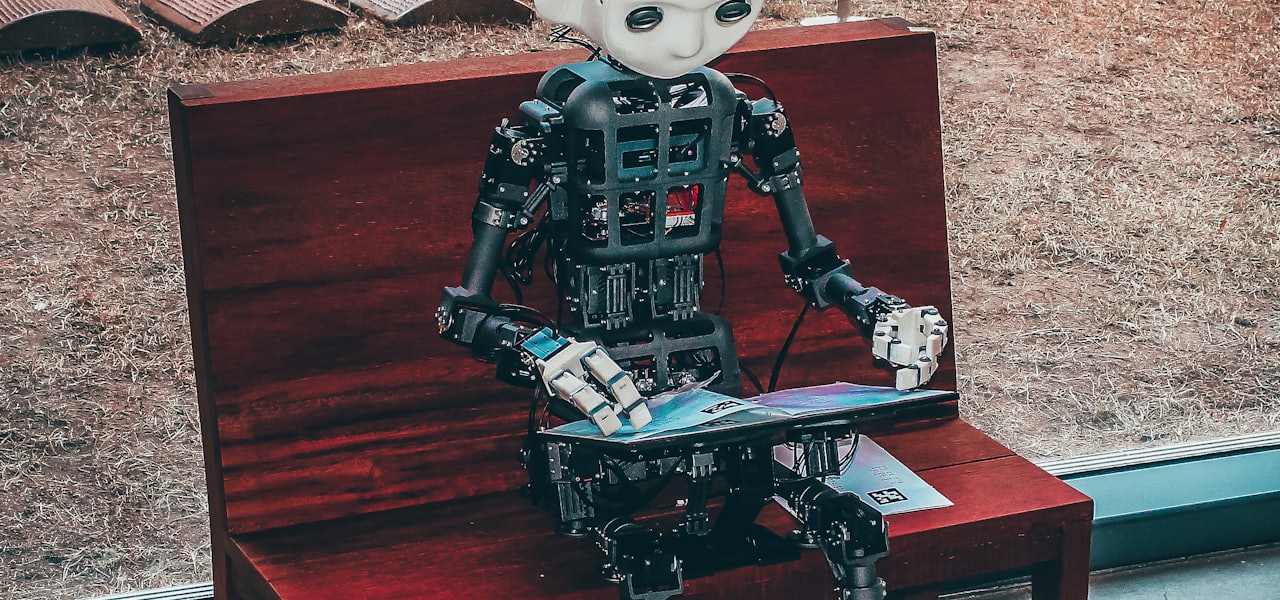
  • Best AI Photo Editors in 2026

    Best AI Photo Editors in 2026

    Shopping for the best AI photo editor? An AI photo editor is software that uses machine learning to help you get more done — it keeps getting smarter as the underlying models improve. Pricing, accuracy, and the size of the model behind the tool are the three factors that most affect daily usefulness. Whether you are a beginner or a pro, the right AI photo editor slots into your workflow and pays for itself fast. We tested the leading options and ranked them by quality, value, and ease of use.

    Read more →